
“Manny-scripts”

Some of you may know that I have a somewhat peculiar fascination with medieval manuscripts, especially antiphoners, graduals, and other choir books. Antiphoners and noted breviaries contain chants for the Divine Office — matins, lauds, prime, terce, sext, none, vespers, and compline — while graduals have the proper chants for the mass. Beyond those two groups, there are also processionals, hymnaries, and sequentiaries.
These manuscripts are worthy of celebration because of their beauty and their significance in liturgical and music history. Many of them include chants which are no longer performed, regional variations of melodies, local spellings of Latin words, and now-defunct liturgical practices. If you’re lucky, these can be used to pinpoint where and/or when the manuscript may have been copied and used. In addition, many of these books have curious histories of ownership (provenance), travel, function, and revision. For example, a note indicating a Tridentine liturgical revision in the margin of a medieval manuscript tells us that it was still being used as a choir book as late as the sixteenth century. On the other hand, a book which had its leaves clipped or painted over ceased to be used as a liturgical book at one point and began to function as a decorative piece of artwork.
This was the case for an antiphoner in the Thomas Fisher Rare Book Library — the first manuscript I ever studied as an undergraduate at the University of Toronto. The chants in this book, whose initials were already beautifully decorated, were obscured with forged illuminations added in the nineteenth century (Figure 1), an era when there was an obsession with the collection of art and artefacts, and their authenticity mattered less than their aesthetic value. As a result, replicas and forgeries filled the market. A quick visual comparison with similar illuminations confirmed to be from the Renaissance indicates that the ones in the Fisher Library antiphoner are of much lower artistic quality and must have been added centuries later. The forger was most significantly betrayed by an illumination which depicts a monk holding a much smaller choir book — choir-book-ception! — with modern notation. There even seems to be a 4/4 time signature (Figure 2). Someone didn’t do their research! The year after I wrote the paper arguing that the illuminations were forgeries, it was confirmed by two scientists from Germany, Sebastian Bosch and Andreas Janke, who analyzed the pigments using XRF spectrometry. One might see this as a story of a manuscript being defaced or desecrated, but I do think it’s interesting how its function and role changed throughout history. It’s a book that lived multiple lives across centuries, and it can serve as a window to each of these time periods.
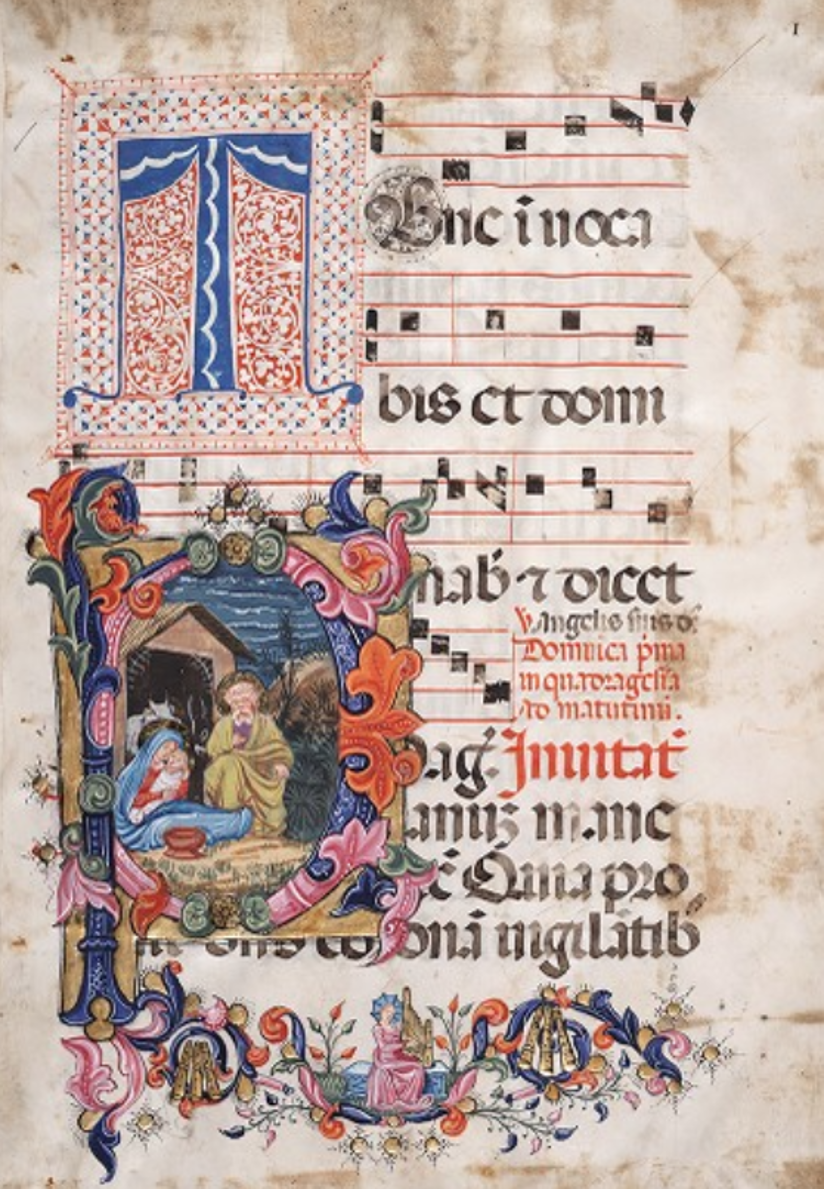
Figure 1 – The initial T at the top of the page is original. The illuminated P at the bottom of the page is a forgery. The Nativity scene in the forgery has nothing to do with the chant below it, which is for the First Sunday of Lent. Note the lack of detail, depth, and perspective in the fake illumination.
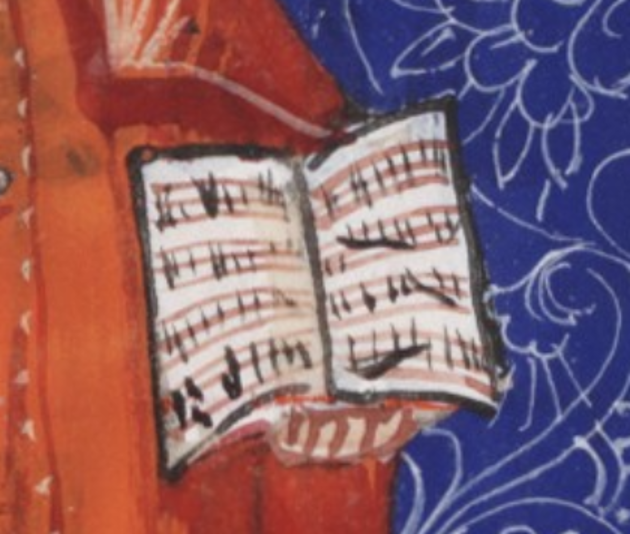
Figure 2 – Busted!
This summer, I’ve been pleased to work with the Digital Analysis of Chant Transmission project in its effort to index and catalogue the many fragments of manuscripts which were dismembered and sold by collector Otto F. Ege in the early twentieth century. This was the product of the same mindset that altered the Fisher antiphoner. The DACT project seeks to inventory the Ege fragments and eventually present detailed indices of the original books. Indexing multiple fragments is a fun challenge. When working with a complete and intact manuscript, you get used to the scribe’s hand and their preferred abbreviations (rubrics especially are heavily abbreviated and often difficult to decipher) (Figure 3). You can assume that the liturgical contents of the book will proceed chronologically, and the beginning of a Sunday or feast day will be indicated with a rubric. A fragment, on the other hand, may start in the middle of a lesson from the first section of matins (called a “nocturne”) and end with a responsory from the third section of matins, so it takes some detective sleuthing to figure out what Sunday or feast the chants are for (Figure 4). Sometimes you are lucky enough to get a saint’s name (Figure 5). Otherwise, it takes some digging in the Cantus database, where these indices will eventually be published.
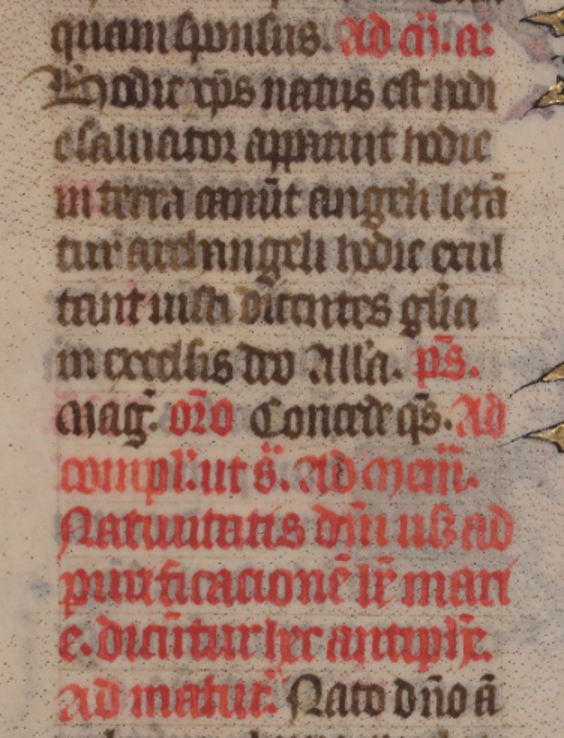
Figure 3 – The Magnificat antiphon at Vespers on Christmas Day, preceded and followed by abbreviated rubrics, in a Book of Hours. My best attempt at a transcription with expanded abbreviations is: “Ad m[agnificat] a[ntiphona]: Hodie Ch[ristu]s natus est hodie salvator apparuit hodie in terra canu[n]t angeli l[a]eta[n]tur archangeli hodie exultant iusti dicentes gl[or]ia in excelsis deo all[elui]a. Ps[almus] mag[nificat]. Or[ati]o concede q[uaesumu]s. Ad comple[torium] ut s[upra]. Ad mem[oriam] Nativitatis D[omi]ni us[que] ad purificatione[m] be[atae] Mari[a]e dicu[n]tur h[a]ec antiph[on]ae ad matut[inum]. The last rubric translates to “At compline, as above. From the memorial of the Nativity of our Lord until the Purification of the Blessed [Virgin] Mary these antiphons are said at matins.” You might recognize the Magnificat antiphon from Benjamin Britten’s A Ceremony of Carols!
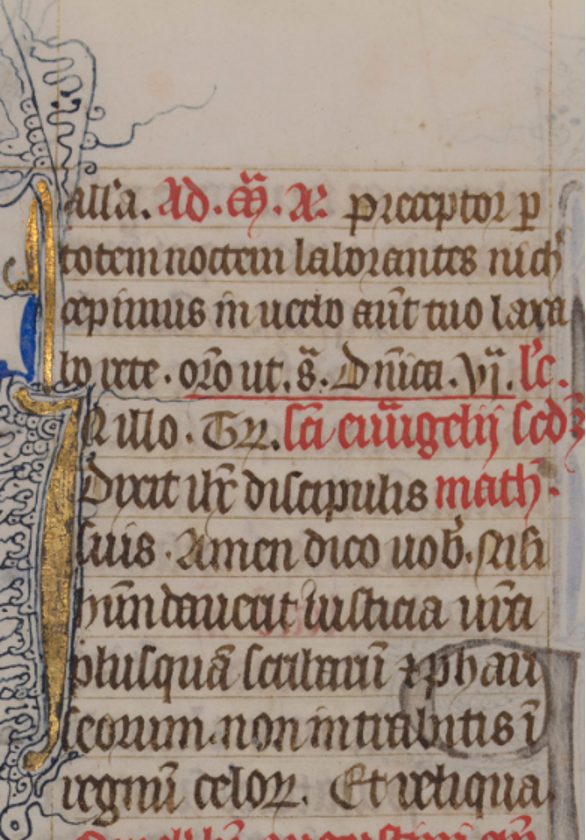
Figure 4 – I was lucky to spot “D[ome]nica VI” in the black text of this French Breviary. Normally that would be in red!
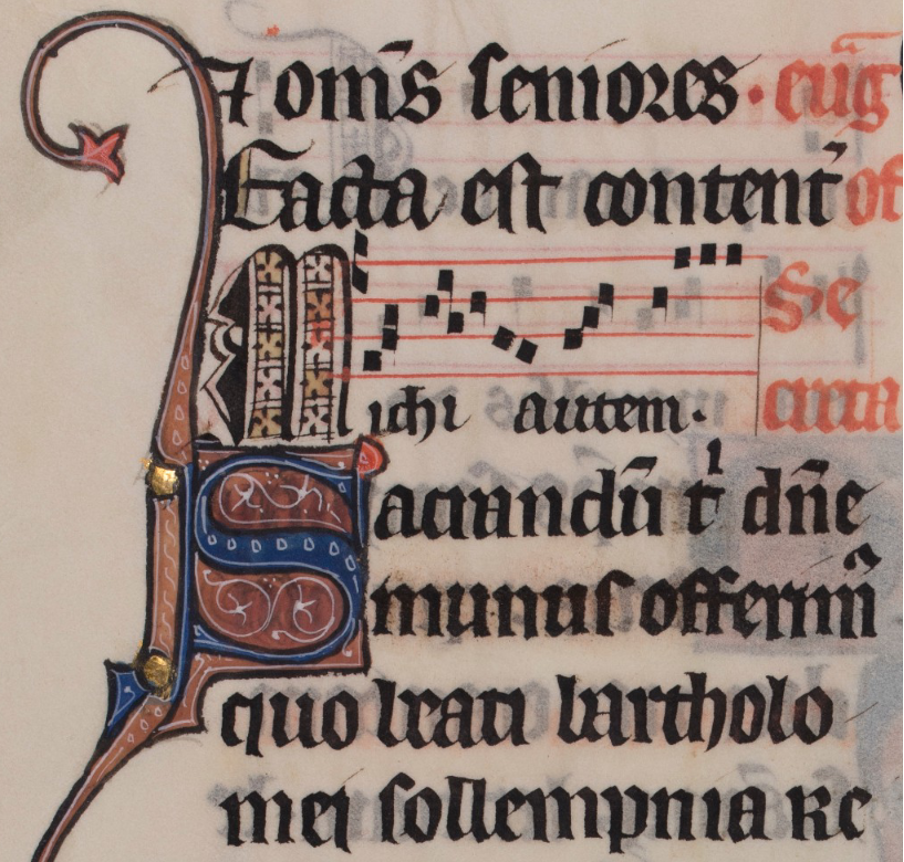
Figure 5 – Luckily, this prayer in the Beauvais Missal mentions Saint Bartholmew, so it’s a fair assumption that this is the mass for his feast day.
My thesis proposal for the DMus at McGill likewise involves a manuscript — one I began researching while completing my master’s degree. Unfortunately, this manuscript, Beinecke MS 571, is in the USA, which is rather inconvenient, so I may change topics, but we’ll see what happens. I drew some interesting conclusions about this book, but there are still many unanswered questions. It’s not a choir book, but there is music in the margins. The main text includes the Dialogues of St. Gregory the Great and a few sermons. It’s curious that more than five different scribes copied the text and there are various styles of script. This tells us that the manuscript was copied over a relatively long period of time, and that it may have travelled. The four instances of music in the margins suggest this as well. There are some unidentifiable very early neumes on one page (Figure 6). Towards the end of the book, there is organum (early polyphony) (Figure 7). Somewhere in between, there is a page with two pieces of music written in the same hand. One is on a staff (Figure 8), while the other is in campo aperto (Figure 9), but the neumes themselves are in the same style. So, in the margins of this book, there is music indicating four distinct notational traditions from different periods. The two musical doodles that are on the same page tell us a lot about where part of this book may have been copied at one point. The neumes can be described as French-Lotharingian hybrid notation. The use of Lotharingian notation for the clivis (a neume indicating two notes, a higher one followed by a lower one) specifically and French notation for everything else suggests the scriptorium at Saint-Maur-des-Fossés, near Paris. Using UV light, I identified the chant with no staff as a fragment of a Benedicamus Domino based on Preciosus Domini (Figure 10 and 11). The neume and ligature forms in this fragment closely matched those used for Preciosus Domini in BNF Lat 12044, a twelfth-century antiphoner copied in Saint-Maur-des-Fossés, while significant differences were noted when the fragment was compared with other sources (Figure 12). The music on a staff at the bottom of the same page is the hymn Ut queant laxis, but not with the usual famous tune. A very thorough catalogue of hymn tunes in Monumenta Monodica Medii Aevi notably does not include this tune for the text Ut queant laxis. However, in BNF Lat 12044, the antiphoner from Saint-Maur-des-Fossés, Ut queant laxis is set to the same tune as the music in the margins of MS 571, but with one extra note added. This is further evidence that MS 571 was at Saint-Maur-des-Fossés when these two chants were added to its margins. I look forward to studying the other two musical examples in this book and trying to learn more about them!
It’s hard to believe that after three years, tomorrow is my last Sunday at St. Thomas’s. I’m looking forward to seeing many of you at church tomorrow. Thank you all for a wonderful three years!
Manuel (Manny) Piazza
Assistant Director of Music (2023–26)
25 July 2026
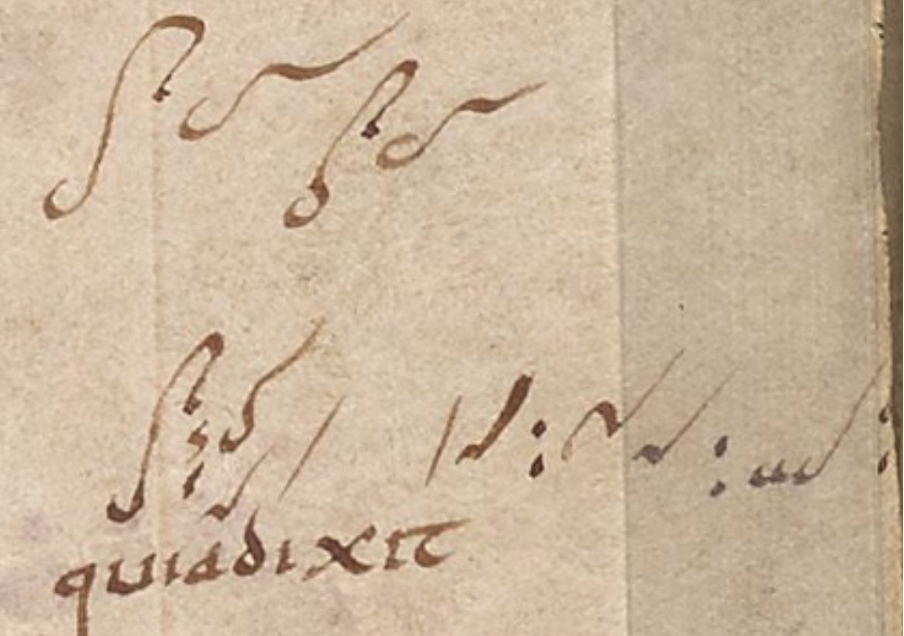
Figure 6 – Unidentifiable very old neumes.

Figure 7 – Organum

Figure 8 – The hymn Ut queant laxis, on a staff.
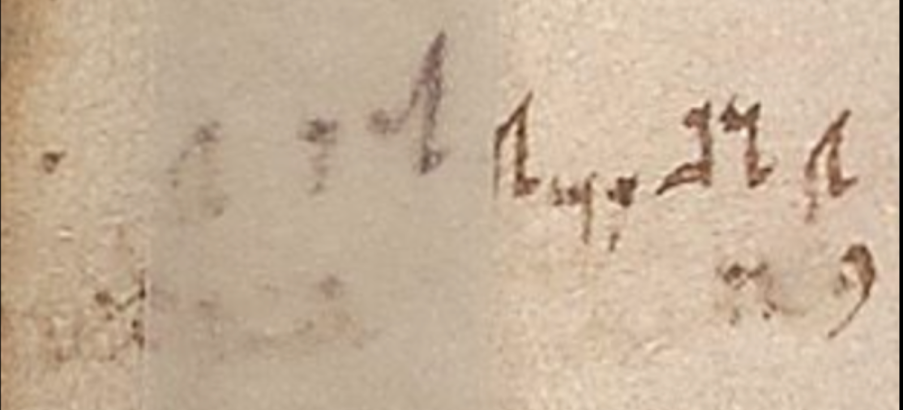
Figure 9 – Mystery neumes on the same page. They are in the same hand and in the same style, but there’s no staff and the text is hard to make out.
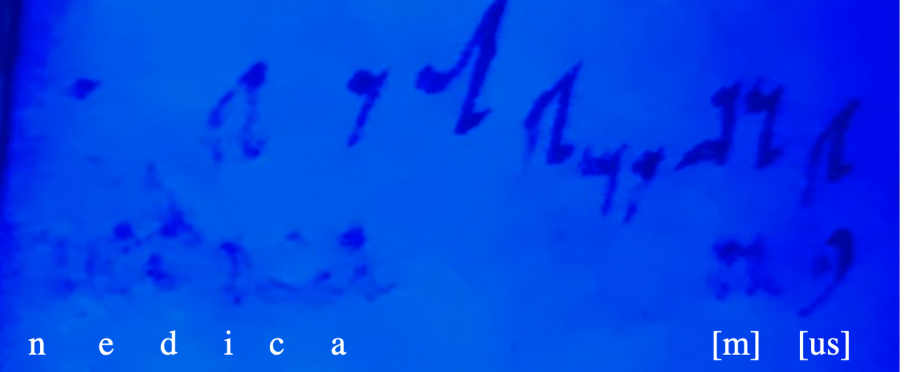
Figure 10 – UV light reveals the text to be “nedicamus”. This must be part of a Benedicamus domino. The edge of the page was probably trimmed.

Figure 11 – This matches a Benedicamus domino based on a chant called Preciosus domini.
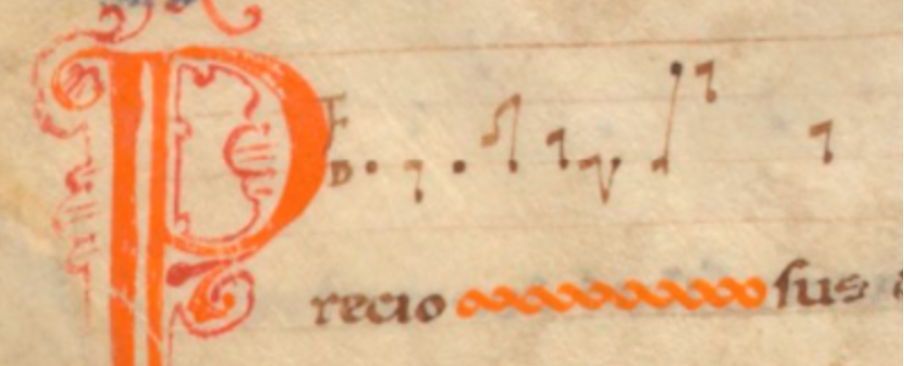
Figure 12 – The only instance of Preciosus domini with neume forms exactly matching the mystery neumes is in an antiphoner from Saint-Maur-des-Fossés. The only difference is this scribe’s preference for the Lotharingian clivis exclusively. The music in the margins of Beinecke 571 has both French and Lotharingian versions of the clivis. Both were known and used at Saint-Maur-des-Fossés.